
Standing tall at 5,895m, Mount Kilimanjaro is a dream destination for adventurers worldwide, offering not just a climb, but a journey through diverse landscapes and climates. Successfully reaching Uhuru Peak requires more than ambition, as climbers face challenges like thinning air, unpredictable weather, and demanding terrains. Understanding these hurdles and how to train for climbing Kilimanjaro is crucial to effectively prepare for the ascent.
This Explore by Nature guide delves into the essentials of how to train for climbing Kilimanjaro, starting with building aerobic endurance and incorporating strength training. Preparing for the mountain's altitude involves strategic planning and this preparation ensures climbers can focus on the experience rather than the obstacles. I am by no means an expert in fitness training and mountaineering. I've written this guide based on my own experience climbing Kilimanjaro and other peaks to aid you in your journey. For a full guide on how to organise climbing Kilimanjaro and an overview of the Lemosho route, click here!
Understanding Kilimanjaro's Challenges
While the allure of reaching the summit of Mount Kilimanjaro can be irresistible, understanding the challenges involved is crucial for anyone contemplating this ascent.
Mount Kilimanjaro Routes
There are seven established routes that lead to the summit of Mount Kilimanjaro.
- Lemosho Route - my personal favourite and one of the most scenic routes that offers climbers either a 7 or 8-day trek. The 8-day trek takes you on an extra acclimatisation day where you hike to 4,500m and dip back down to 3,900m for the night.
- Machame Route - also known as the "Whiskey Route", this is the most popular route for climbing Kilimanjaro. This is typically a 6 or 7-day trek that allows you to climb high and sleep low.
- Marangu Route - also known as the "Coca-Cola Route", this is the only route up Kilimanjaro that offers small hut accommodation instead of camping. This is typically a 5 or 6-day trek and has the lowest success rate of all routes.
- Rongai Route - one of the quietest routes and the only route that climbs the northern slope. This is typically a 6 or 7-day trek with a milder ascent.
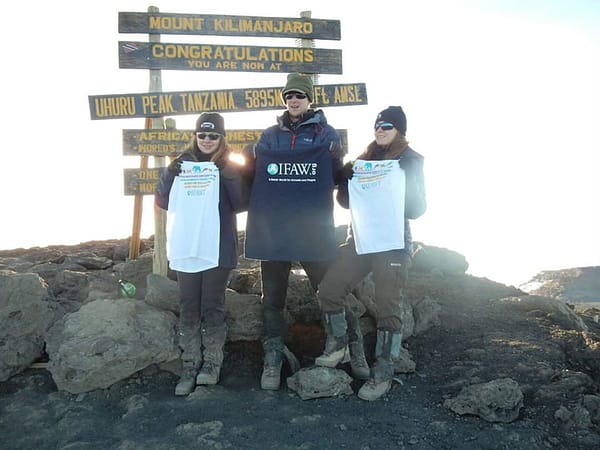
Standing at the summit of Mount Kilimanjaro, Tanzania.
- The Northern Circuit - the newest route for climbing Kilimanjaro and follows the Lemosho route until reaching the Lava Tower, where it joins up with the Rongai route. As it's an 8-9 day trek, this route has the highest success rate.
- The Shira Route - this route has the highest starting elevation of 3,600m, which is simply too high for most people beginning their climb. This is typically a 6-8 day trek that is only recommended if you're experienced in high altitudes.
- Umbwe Route - considered the hardest and most direct route up to the summit, taking between 5-7 days. As such, it has a lower success rate than other routes. This route is only recommended if you're experienced in high altitudes and have technical knowledge of mountain climbing.
Shorter vs Longer Treks
The overall success rate on reaching the summit is between 60% and 80%, but this varies depending on the route you choose to take and the length of the trek. In the early 2000s, the Kilimanjaro National Park Authority published the following statistics for each route:
- On 5-day routes, the success rate is 27% (Marangu, Umbwe)
- On 6-day routes, the success rate is 44% (Machame, Marangu, and Rongai)
- On 7-day routes, the success rate is 64% (Machame, Lemosho, and Rongai)
- On 8-day routes, the success rate is 85% (Lemosho, Northern Circuit)
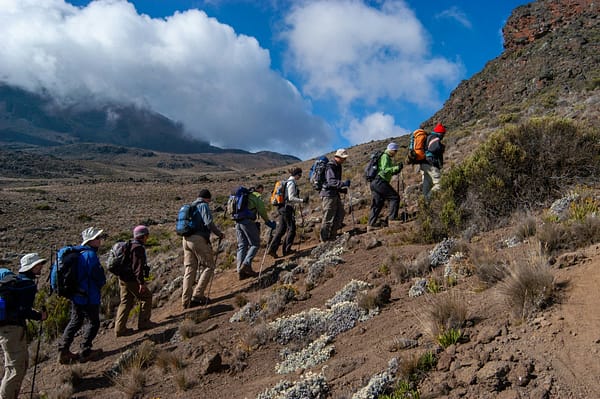
Trekkers climbing Mount Kilimanjaro, Tanzania (Crispin Jones - Unsplash)
It's important to note that these statistics are heavily outdated and the popularity of shorter treks has declined over recent years. Now that climbers are more aware of the dangers of altitude sickness, longer treks are becoming more favoured.
Altitude & Altitude Sickness
One of the most significant challenges of climbing Kilimanjaro is dealing with high altitude. As you ascend, the reduced oxygen levels can lead to altitude sickness, characterised by symptoms like headaches, dizziness, nausea, and fatigue. In severe cases, this can even lead to conditions like high altitude pulmonary edema (HAPE) or high altitude cerebral edema (HACE).
Physical Demands
The trek to the summit of Kilimanjaro can be physically taxing, requiring a good foundation of cardiovascular endurance, strength, and stamina. Long hiking days, steep ascents, and the high altitude make climbing Kilimanjaro a test of physical fitness.
Mental Toughness
The psychological challenge of climbing Kilimanjaro is often just as demanding as the physical one. The repetitive nature of trekking, combined with physical exhaustion, can test a climber's mental resilience. Maintaining a positive attitude and having strategies to overcome mental fatigue, such as setting small milestones and focusing on the breathtaking views, can make a significant difference.
How to Train for Climbing Kilimanjaro
Training for climbing Kilimanjaro focuses on cardiovascular fitness and hiking. Practice on steeper inclines and high altitudes is beneficial, as well as building leg strength for endurance. Mental preparation is as important as physical preparation. Endurance and mindset affect the climb experience greatly. With dedication and the right training, you willl improve your chances of a successful summit attempt.
Aerobic & Cardiovascular Training
Training aerobically is an essential part of how to train for climbing Kilimanjaro. As climbers ascend to higher altitudes, their bodies will rely heavily on efficient oxygen use and sustained energy output. Aerobic exercise helps improve your cardiovascular system's efficiency, allowing your heart and lungs to deliver oxygen more effectively to muscles during exertion, potentially reduce the risk of altitude sickness. Ideally, begin your cardiovascular training up to 6 months in advance. Progressive improvements over time are key to effective conditioning.

Woman running (Venti Views - Unsplash)
Activities such as running, cycling, and swimming improve your cardiovascular health, endurance, and mental resilience. If you're new to running, begin with a combination of walking and running to allow your body to adapt. Start with short intervals, such as 30-60 seconds of running, followed by 2 minutes of walking. Gradually increase the running intervals as your fitness improves. Aim for 3-4 sessions a week, ensuring you allow rest days for recovery. Set small, attainable goals to track your progress. A goal for the first month or two could be to run for 10 minutes continuously. As you approach month 3-4 of your running journey, work towards running a 5K. By the time you're ready to climb Kilimanjaro, aim to be running continuously for 45-60 minutes or reaching a distance of 10K.

Swimming (Efe Kurnaz - Unsplash)
Outdoor cycling and stationary biking offer both aerobic benefits and strength conditioning. Swimming provides a full-body aerobic workout without the joint stress of some land-based exercises. This is ideal for cross-training and injury prevention. Climbing stairs is excellent for building leg strength and cardiovascular fitness, similar to what is needed for mountain trekking. Incorporate stair intervals into your routine for maximum benefit. Pay attention to signs of fatigue or discomfort and allow for sufficient recovery time.
Strength Training
Training for climbing Kilimanjaro is more than just going out on walks. It demands a high level of physical preparation, especially strength training, which is crucial for success. Focusing on full-body workouts, particularly targeting your leg and core strength, will help you handle the trek's demands. Start with light weights and repetitions of around 8-10 to begin building a solid foundation. Gradually, you'll shift towards heavier weights. Maintaining proper form during these workouts is essential. This minimises injury risks and ensures effective muscle development. Proper strength training is not just about building muscles but also preparing them to endure long hours of climbing.

Strength training (John Arano - Unsplash)
Lower body workouts are vital when training for climbing Kilimanjaro. Exercises such as lunges, squats, and the leg press are excellent for conditioning your legs. Core stability exercises are also crucial for how to train for climbing Kilimanjaro. A strong core helps maintain balance and stability over uneven terrain, which is a common challenge during the trek. Your core helps in carrying a backpack comfortably, essential for the multi-day hike. Strengthening your core involves focusing on your abdominals, obliques, and lower back. For beginners, consulting a personal trainer might be beneficial. They can guide you in developing a regimen that suits your needs.
Incorporating Long Hikes
Long hikes, especially those lasting over 5 hours, are vital to building the endurance needed for the trek. These hikes expose you to various terrains and elevation gains. Regularly hiking long distances, for example once a week, helps you gauge your fitness level and primes your body for the mountain's daily challenges. Long hikes can be mentally challenging, especially when you're tired or facing difficult terrain. These experiences during your training can help you build the mental resilience you'll need to push through tough moments when climbing Kilimanjaro. You may also encounter unexpected issues during long hikes, such as blisters, fatigue, or changing weather. These situations can help you develop the problem-solving skills needed for the actual climb.

Mountain hiking (Ante Hamersmit - Unsplash)
Carrying a backpack, especially if it's the pack you intend on bringing with you to climb Kilimanjaro, will help strengthen your core and upper body. This is important for maintaining balance and stability during the climb. If you're planning on climbing Kilimanjaro with a group, consider getting together on these practice hikes to learn more about each other's strengths and weaknesses, as well as build camaraderie and communication skills. The more you hike, the more confident you'll feel in your abilities. This confidence can make a significant difference in your mental state during the climb, helping you stay positive and focused.
Elevation & Altitude Acclimatisation
While you can't fully replicate the high altitude of Kilimanjaro, unless of course you embark on a mountain climb of a similar level beforehand, hiking at higher elevations in your training can help your body start to adapt to lower oxygen levels, which can be beneficial for acclimatisation. Altitudes of 1,500-2,000m and above are excellent elevations to ascend when preparing for Kilimanjaro. It's important to note that while this is helpful, it's not necessary. Mount Kilimanjaro was the first ever mountain, or even a notable hill, that I hiked. I had incorporated long hikes into my training regimen, but most of this was similar routes around where I lived, rather than travelling to hills or mountains. If I were to do it all again with the knowledge I have now, I certainly would have included some practice mountains just to increase my odds of reaching the summit.

Hiking at high altitudes (Jonny Gios - Unsplash)
There is the option to undergo proper acclimatisation training as part of how to train for climbing Kilimanjaro. While not necessary, training your body at lower oxygen levels can help reduce the risk of altitude sickness, which is vital for aiming for a successful summit attempt. The use of elevation masks or going to an altitude centre is designed to simulate the sensation of breathing in thin air at high altitudes by limiting oxygen intake. While elevation masks can help strengthen the diaphragm, they might not suffice as proper altitude training. Altitude centres, however, are more reputable and aimed to enhance performance for high-altitude activities.
Trekking Gear Experience
While physical fitness and acclimatisation are often the most talked about topics on how to train for climbing Kilimanjaro, familiarising yourself with your trekking gear is equally critical. Using your gear comfortably and confidently before embarking on the trek can make the difference between an enjoyable experience and a stressful, uncomfortable journey.
Your hiking boots are perhaps the most crucial piece of your trekking equipment. Ill-fitting or new boots can lead to blisters, sore feet, and discomfort, which can derail even the most determined climber. Wearing your boots during practice hikes will help mould them to the shape of your feet. Practice hikes also allow you to assess comfort or support, enabling you to address any issues like tight spots or inadequate arch support before your trip. If you are yet to purchase a pair of hiking boots, consider going to an outdoor shop that has experts to help you find the right fit for you. I purchased my boots from Cotswold Outdoor back in 2016 and still have them to this day.

Hiking boot (Ida Stoycheva - Unsplash)
Your backpack is your lifeline on the mountain. Practice packing your backpack to prioritise gear and understand how to distribute weight efficiently. Ensure your backpack fits well by adjusting the straps to prevent backache and improve mobility. Layering is critical for managing changing weather conditions. Learn how to add or remove layers swiftly to adjust to temperature changes. Try various combinations during training to figure out what keeps you most comfortable while not taking up too much room in your backpack. Trekking poles can be incredibly beneficial for conserving energy and providing stability, especially when descending. Practice using trekking poles on uneven terrain to perfect your technique which helps in maintaining balance and reducing impact on joints.
Mental & Psychological Preparation
Climbing Kilimanjaro is not only a test of physical endurance, but also a significant mental and psychological challenge. The journey requires mental resilience, a positive outlook, and preparation to tackle unexpected challenges. Here's how to train for climbing Kilimanjaro and prepare mentally for this adventure.
Understand that the climb will involve long hours of trekking, possible altitude sickness, and unpredictable weather conditions. This awareness will help you mentally brace yourself for tougher moments. Visualise reaching the summit and the sense of accomplishment you'll feel. Positive visualisation can improve performance and increase your drive to succeed. Recognise that some days will be harder than others and that this is part of the journey. Developing the ability to push through tough days is crucial.

Standing at the top of Barranco Wall, Mount Kilimanjaro.
Altitude can have a strong psychological impact, and the discomfort of trekking can challenge even the strongest minds. Practice deep and controlled breathing exercises to help manage altitude discomfort and anxiety. Whether you're climbing with friends or complete strangers, build strong bonds with your climbing group and encourage one another through challenging times. As part of your practice hikes, go on all-day hikes to understand the toll of a long, challenging trek and learn more about your mindset during these experiences. By equipping yourself with the right mindset and strategies, you'll be more resilient in the face of adversity.
Nutrition & Hydration
For climbing Kilimanjaro, nutrition and hydration are key factors for success.
Food provides the energy needed for tackling elevation gains and long hours of hiking. A good diet combines carbohydrates, proteins, and healthy fats. Carbohydrates are your main source of energy, while proteins help with muscle repair. Healthy fats provide long-lasting energy, perfect for sustained effort during the ascent. Snacks such as nuts or dried fruits can be useful for quick boosts between meals. While training to climb Kilimanjaro, practice eating foods you'll consume on the climb to ensure your body can adjust. This preparation helps your body become accustomed to the types of meals you will have on the mountain.

Fresh bowl of food (Odiseo Castrejon - Unsplash)
Staying hydrated is vital when climbing Kilimanjaro due to the high altitude and reduction in oxygen levels. At these heights, your body loses water faster, so it's crucial to drink 4-5L litres of water daily. Proper hydration also reduces the risk of altitude sickness by helping your body adjust. If you're not accustomed to drinking such large quantities of water, consider trying to
Ask an Expert
When preparing to climb Kilimanjaro, consulting with experienced climbers and trainers can make a significant difference. Each climb comes with its own set of challenges, and this is where experience truly counts. Experts can help tailor training plans and guide you to invest in quality equipment that won't let you down when it matters most. Consulting experts also bring the added benefit of connecting you with a broader community of climbers who have successfully made the journey. Look for books, podcasts, and websites authored by those who've not only summited Kilimanjaro but have the wisdom to impart the nuances of the climb. Social media platforms can help connect you with communities who share insights and resources for mountain climbing.

Team photo at Stella Point on the way to Uhuru Peak, Mount Kilimanjaro.
You can also work with a personal trainer to develop a customised training plan tailored to your unique needs and goals. A trainer will assess your current fitness level and design a program that gradually increases in intensity to strengthen areas where you are less conditioned. By working with a trainer, you are more likely to maintain a consistent workout schedule, keeping you on track in your preparation. Training incorrectly or too intensely can lead to injuries, halting your progress. A personal trainer ensures you use the correct form to maximise the effectiveness of exercises and reduce injury risk. They can also recommend appropriate recovery strategies and help you navigate any injuries promptly.
Training Consistency
Consistent training is vital to ensure you not only reach the summit, but that you do so safely and enjoyably. By engaging in consistent training activities, your body becomes more efficient in utilising oxygen, a key factor at high altitudes. Consistency requires discipline and if you're unable to stick to a regimen, you may need to look at asking for help from friends or family to keep you on track. See if anyone is interested in a gym buddy or wants to get into running. Having the accountability will help keep you committed to your training. On tougher days, they can provide the encouragment you need to keep going.
Climbing Kilimanjaro: My Experience
Mount Kilimanjaro was my first ever mountain and trekking experience. To read my day-by-day experiences along the Lemosho route, check out the Explore by Nature epic guide to climbing Kilimanjaro here! I distinctly remember the feeling of utter panic when I took my first few steps into the rainforest at the base of Mount Kilimanjaro. I could feel the altitude immediately and I thought I'd never reach the summit if I'm already struggling. Thankfully, your body is much more resilient than most of us give it credit for. Over that first day, I slowly began to acclimatise and each step became that little bit easier.

Climb Kili group photo at Uhuru Peak, Mount Kilimanjaro.
With regards to how to train for climbing Kilimanjaro, I certainly didn't train as well or consistently as I should have. While I enjoyed walking and did so quite often, I had hiked no mountains during my training. I began focusing on cardiovascular training around 4 months before the big climb. Starting with working up to 60-minute indoor cycling sessions, I then worked up to running for around 25-minutes at a time. Once I was only 2 months away from the climb, I progressed my running intervals to 45 minutes and began outdoor cycling for up to an hour. I hadn't given any time to strength training in the lead up to climbing Kilimanjaro, and luckily this didn't hinder my experience. However, strength training is a part of my regular training now and I would certainly recommend it for mountain climbs.
To Summarise
Ultimately, preparation enhances your enjoyment of the experience. Instead of being preoccupied with exhaustion or discomfort, you'll be able to fully appreciate the stunning landscapes and the unique atmosphere of each camp along the route. Dedication to training ensures that the focus remains on the adventure itself, rather than on the physical struggles.

Mount Kilimanjaro (Sergey Pesterev - Unsplash)
By taking the time to learn how to train for climbing Kilimanjaro, you lay the groundwork for a successful, safe, and enjoyable ascent of Kilimanjaro. To discover the full guide to climbing Kilimanjaro, including a detailed day-to-day itinerary for the scenic Lemosho route, check out the Explore by Nature guide here!
Like this Post? Pin it!


0 comments