
Nestled in the rugged landscape of Snowdonia National Park in North Wales, the Welsh 3000s represent some of the most picturesque and challenging peaks in the UK. For adventure seekers and enthusiastic hikers, these peaks offer a thrilling opportunity to explore stunning terrains while testing their skill and stamina.
If you're dabbling with the idea of hiking the Welsh 3000s, read on and discover everything you need to know with this Explore by Nature guide.
What are the Welsh 3000s?
The Welsh 3000s are a collection of 15 mountains, each over 3,000 feet (914m) in elevation. These peaks are spread across three distinct mountain ranges in North Wales: Snowdon Massif, Glyderau, and the Carneddau. Renowned for their breathtaking views and diverse landscapes, these mountains attract hikers from near and far.
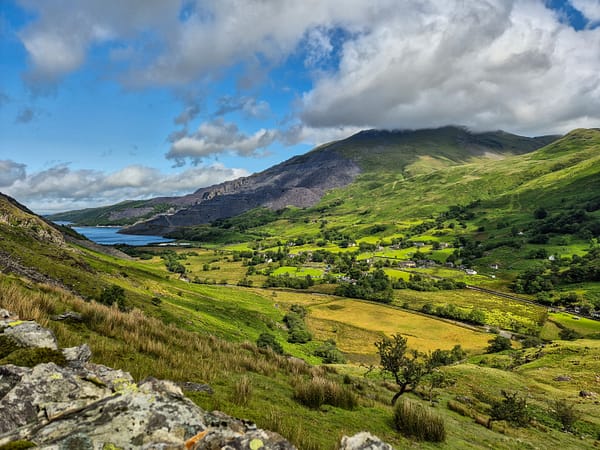
Views over Nant Peris, Wales.
The Snowdon Massif mountain range comprises Snowdon (Yr Wyddfa), the tallest mountain in Wales (1,085m), Garnedd Ugain (1,065m), and Crib Goch (923m). Within the Glyderau mountain range, the peaks above 3,000 feet are Elidi Fawr (924m), Y Garn (947m), Glyder Fawr (1,001m), Glyder Fach (994m), and Tryfan (918m). Finally, Carneddau comprises Pen yr Ole Wen (978m), Carnedd Dafydd (1,044m), Carnedd Llewelyn (1,064m), Yr Elen (962m), Foel Grach (975m), Garnedd Uchaf (925m), and Foel-Fras (944m).
What is the Welsh 3000s 24-Hour Challenge?
Completing the Welsh 3000s is an aspiration for many passionate hikers, but for those looking for an extra challenge, there is a revered test of endurance: the Welsh 3000s 24-hour challenge. This serious undertaking involves climbing all 15 peaks within a single 24-hour period without any form of transportation between the mountains. Typically, the countdown begins once you reach your first peak and ends at your last. For this reason, some people choose to camp at the first summit the night before.
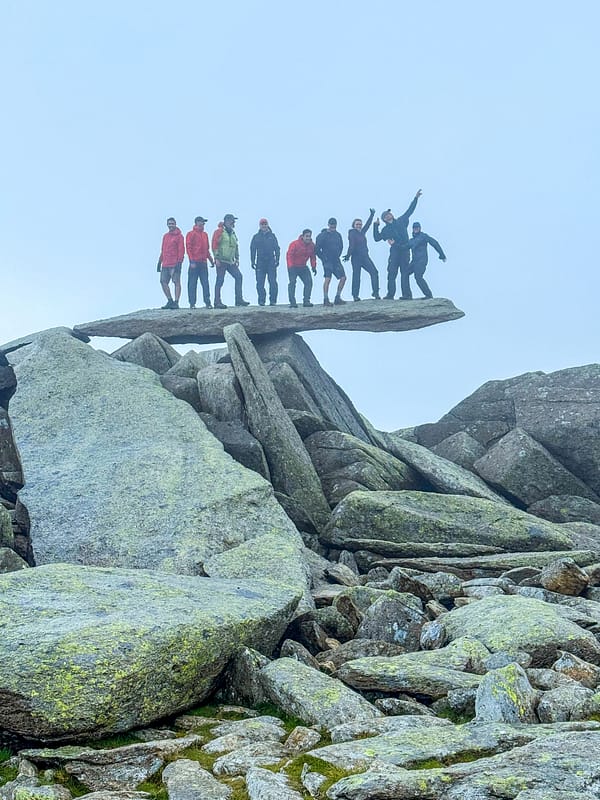
Posing on the Cantilever, Wales.
The challenge covers approximately 30 miles (48km) with around 3,658m (12,000ft) of total ascent. This makes it a physically demanding endeavour that requires significant stamina and strength. Hikers will traverse a range of terrains, from well-defined paths to rocky scrambles. More technical sections, such as Crib Goch, add extra complexity and require a head for heights. The Welsh 3000s 24-hour challenge is not to be taken lightly. It demands comprehensive preparation, including physical conditioning, tactical planning, and a genuine commitment to pushing personal limits. However, for those who conquer it, the reward is not just in the achievement, but in the unforgettable experience of hiking some of the most stunning landscapes in Wales.
How Difficult is the Welsh 3000s?
Attempting to conquer the Welsh 3000s in under 24 hours is a significant undertaking that requires both physical and mental preparation. With almost 50km of terrain, over 3,500m in ascent, and no transport in-between, the challenge requires excellent physical endurance and stamina. Hikers face a mix of terrain, from rocky scrambles to grassy paths, adding complexity and increasing fatigue. To complete the challenge within 24 hours, maintaining a steady and efficient pace is crucial. Hikers must manage their time wisely, balancing speed with safety and ensuring adequate breaks to avoid burnout. Furthermore, starting in the early hours and continuing into the night adds difficulty to the challenge.

Scrambling up Tryfan, Wales.
The mountains in Wales are notorious for their rapidly changing weather. Rain, fog & strong winds can descend quickly, complicating navigation and morale. Even during the warmer months, temperatures can be unexpectedly cold at higher elevation, necessitating appropriate clothing and gear. Tackling such a challenging route requires mental toughness to overcome moments of doubt and physical discomfort. Hikers need to push through fatigue, pain, and possibly discouragement. Fuelling the body properly throughout the challenge is critical.
How to Train for the Welsh 3000s
Training for the Welsh 3000s, whether in 24 hours or over the course of a few days, requires dedication, strategic planning, and proper physical preparation to ensure success over this demanding route. Before starting any training program, assess your current fitness level. This is no easy challenge, and it's vital to ensure you've gained experience climbing other mountains before attempting it.

Ben Nevis summit (1,345m) as part of the UK 3 peaks.
Begin with shorter hikes, gradually increase the distance and elevation gain. Aim for regular hiking, with at least one long hike per week. If possible, incorporate running or cycling into your route to improve cardiovascular endurance. These activities are excellent for developing stamina without constantly going on hikes. Focus on exercises that target your legs, such as squats, lunges, and steps, which will enhance your ability to handle steep ascents and descents. Working on core strength will help to stabilise your body during prolonged activity. Implement a regular stretching routine to maintain flexibility, which can improve range of motion and reduce the risk of injury.

White Mounth Munros hike, Scotland.
Around 2-3 months before the date you intend to embark on the Welsh 3000s 24-hour challenge, consider scheduling in another mountain challenge or long hike. I completed the White Mounth Munros route as part of my training plan. With a distance of 30km and approximately 1,775m total elevation gain, this walk is a great way to test your endurance. Mountain challenges such as the UK 3 peaks challenge (24-hour or 3-day edition) or the 12-hour Yorkshire peaks challenge are great examples of how to test your readiness for the Welsh 3000s. Whatever you choose to do, ensure you complete at least one hike that is 30-50km and one hike that has a total elevation of 1,000m.
How to Organise the Welsh 3000s
Solo vs. Guided
Navigating the Welsh 3000s can be tricky, especially under poor weather conditions, nightfall, and exhaustion. Without a guide, you're solely responsible for finding the correct route and staying safe. However, if you have strong navigation skills, support at the end of each mountain range, and a check-in system for emergencies, completing the challenge without a guide will help save on expenses. Undertaking the challenge solo offers full control over your schedule, pace, and route choices. It can also provide a profound sense of achievement.

Team photo prior to ascending the first peak of the Carneddau range, Wales.
On the other hand, a professional guide brings invaluable expertise in navigation, weather assessment, and route efficiency, for those who are less experienced in endurance hiking and mountain climbing. Guides are trained in handling mountain emergencies, providing an added sense of security in case of adverse conditions or incidents. Additionally, they'll provide support teams at the end of each mountain range, keeping you well-fed, hydrated, and cared for. The importance of this cannot be understated. This is a serious challenge that requires you to be as prepared and fuelled as possible. Hiring a guide, however, is a financial investment and it means adjusting to their schedule and pace, which might not always align perfectly with your personal preferences.
I embarked on this challenge with The Mountaineering Company, and I'm extremely glad I did. They delayed the start of the hike to avoid high winds and lightning, sourced us hot meals and drinks, and took care of all the navigation and thinking when the exhaustion had clouded our minds. Personally, I couldn't recommend them enough for this challenge.
What to Bring?
If you're preparing to tackle the Welsh 3000s challenge within 24 hours, proper gear and preparation are crucial for a safe and successful journey. Here's a list of essentials to pack for this demanding mountain adventure.
Clothing
- Base Layers - dress in moisture-wicking base layers to manage sweat.
- Insulation - bring a mid-layer like a fleece or a lightweight down jacket for warmth. In the colder months, bring both a fleece and a thick down jacket.
- Outer Layers - waterproof and windproof outer shell and trousers are essential to withstand unpredictable weather.
- Hiking Socks - comfortable, hiking/walking socks to prevent blisters. Bring 2-3 pairs to swap out half way through or after each mountain range. Even if your feet don't get wet, a fresh pair of socks surprisingly boosts morale.
- Footwear - sturdy, well-fitted hiking boots with ankle support are necessary given the rugged terrain. Ensure you've worn these for 30km+ training hikes to test their long-term comfort.
- Accessories - pack a cap or wide-brimmed hat for sun protection, sunglasses, and a warm hat and gloves for the night/colder weather.
Equipment
- 20-40L Backpack - choose a lightweight, comfortable backpack with a capacity ranging from 20-40 litres to accommodate your gear without overburdening you. If you have a support crew/vehicle after each mountain range, you can pack extra gear in a separate bag to swap out as you go. A backpack with a frame helps alleviate pressure on your back. Ensure your backpack has a waterproof cover or purchase one for the unpredictable weather.
- Hydration - carry at least two litres of water for each mountain range. If you have a support crew/vehicle between the ranges, water can be topped up there. If not, consider bringing water purification tablets or a filter to prevent carrying too much water at the beginning of your climb. Electrolyte tablets are recommended.
- Nutrition - high-energy snacks like trail mix, energy bars, dried fruits, and sandwiches will keep you fuelled throughout the challenge. High calorie camping food is recommended after each mountain range.
- Hiking Poles - helpful for stability and to reduce strain on your knees during descents. Excellent for carrying your weight when the exhaustion begins to hit.
- Navigation Tools - if you're not hiking with a guide, a detailed map of Snowdonia and a reliable compass are crucial. If you're using a GPS device or app, ensure it's loaded with the route, has offline capabilities, and you have battery packs for charging.
- First Aid Kit - include bandages, antiseptic wipes, pain relievers, blister plasters, and any personal medications.
- Safety Equipment - bring a whistle and emergency foil blanket for emergencies. A headlamp or torch with extra batteries. Due to the duration of the hike, you will be walking in the dark at times.
Where to Eat Near the Welsh 3000s
- Peak Restaurant - situated in Llanberis, this restaurant serves a range of delicious dishes perfect after a tough adventure on the mountains. Vegetarian, vegan & gluten-free options available.
- Vaynol Arms - a welcoming pub in Nant Peris with fantastic views of the mountains, offering classic Pub dishes. Vegetarian, vegan & gluten-free options available.
- Panda Babo Bar & Thai Food - located in Llanberis, this food-truck-style restaurant serves fresh and flavourful homemade Thai Food and Bubble Tea
Where to Stay Near the Welsh 3000s
Overnight Parking:
- Caernarfon Layby - public layby away from the main road with a stream nearby, situated near Pen y Pass.
- Llanberis Layby - a layby on the road above Llyn Peris, typically quiet overnight.
- Nant Gywant Layby - layby in Caernarfon overlooking the mountains.
Campsites:
- Tŷ Isaf Campsite - peaceful campsite in two fields of a working farm, located in Nant Peris. No online booking, cash payment on arrival (£10 per person/night). Suitable for motorhomes, caravans & tents.
- Cae Gwyn Campsite - situated in Nant Peris opposite the park and ride car park. No online booking available, cash payment on arrival (£15 per person/night). Suitable for motorhomes, caravans & tents.
- Llyn Gwynant Campsite - situated in Caernarfon, this serene campsite is surrounded by mountains, a river and a lake. This campsite is primarily for tents, but limited motorhome pitches are available.
Accommodation:
- YHA Snowdon Pen y Pass - an affordable stay with breathtaking views of the nearby mountains, this hostel is perfectly located for the start of the Welsh 3000s south to north route.
- The Heights - located in Llanberis, this bunkhouse offers dormitory-style accommodation and serves delicious dishes at their restaurant.
- Pen-y-Gwryd Hotel - historic hotel located close to Pen y Pass with beautiful views of the surrounding mountains.
The Welsh 3000s Routes
There's really only two ways to complete the Welsh 3000s in under 24 hours, and that's by either hiking from north to south, or vice versa. Choosing between these routes for the Welsh 3000s is largely a matter of personal preference and overall strategy. Each direction offers unique challenges and rewards, and your decision might depend on whether you prefer to tackle the most difficult terrain early or enjoy ending on a high note with the grandeur of Snowdon. Here, you'll find a more detailed guide to each peak, and an overview of the two routes you can take to conquer them all.
Welsh 3000s Peaks List
Snowdon Massif
- Crib Goch (923m) - starting from Pen y Pass, ascend via the Pyg Track until reaching the diverging path leading towards Crib Goch. This ridge is famous for its knife-edge arêtes and requires sure-footedness and a good head for heights. The scramble is demanding and should only be attempted in good weather.
- Garnedd Ugain (1,065m) - from Crib Goch, proceed along the ridge towards Garnedd Ugain, the second-highest peak in Wales. The navigation can be tricky due to rocky terrain.
- Snowdon/Yr Wyddfa (1,085m) - following Garnedd Ugain, a gradual path climbs to the Snowdon summit. As the highest point in Wales, Snowdon is often bustling with hikers. An early morning start will reduce the likelihood of encountering lots of people.
Glyderau
- Elidir Fawr (924m) - this strenuous climb begins in Nant Peris and boasts sweeping views across the landscape, allowing hikers to catch their breath and marvel at their progress.
- Y Garn (947m) - from Elidir Fawr, the route descends slightly before climbing again towards Y Garn along a relatively straightforward path.
- Glyder Fawr (1,001m) - from the summit of Y Garn, the path towards Gylder Fawr involves a steeper ascent through scree-filled terrain. Known for its dramatic rock formations, Gylder Fawr is a highlight of the Welsh 3000s, offering a surreal landscape resembling another world.

Tryfan, Wales.
- Glyder Fach (994m) - continuing from Glyder Fawr, a short yet engaging scramble leads to Glyder Fach. The famous Castell y Gwynt (Castle of the Winds) is located here, and the breathtaking views are nothing short of inspiring.
- Tryfan (918m) - after Glyder Fach, the route descends toward the col known as Bwlch Tryfan. From this point, the route turns into a steady scramble up to the summit of Tryfan. Known for its rocky peaks and iconic Adam and Eve boulders, it offers a thrilling climb.
Carneddau
- Pen Yr Ole Wen (978m) - a steep ascent from Ogwen Valley, the initial ascent can be gruelling. The path zigzags up grassy slopes and rocky terrain to the summit.
- Carnedd Dafydd (1,044m) - a broad ridge walk from Pen Yr Ole Wen leads you to Carnedd Dafydd. This section offers a gentle climb after the initial ascent, with expansive views all around.
- Carnedd Llywelyn (1,064m) - continuing along the ridge, Carnedd Llywelyn is the highest peak in the Carneddau massif. The path involves a steady ascent, with plateaus and rocky outcrops. At the summit, on a clear day, hikers are rewarded with stunning views over the region, including glimpses of Anglesey and the Irish sea.
- Yr Elen (962m) - this peak is slightly off the main ridge, and its approach and summit provide a more solitary experience compared to the busier paths on the Carneddau range.

Carnedd Llywelyn summit in the middle of the night, Wales.
- Foel Grach (976m) - returning to the main ridge path, Foel Grach is reached via a gentle slope. The terrain here is grassy and less rugged. After a long day, the summit shelter can provide a welcome rest stop, especially in adverse weather.
- Garnedd Uchaf (925m) - a short stroll from Foel Grach leads to Garnedd Uchaf. This peak was once excluded from many Welsh 3000s lists, but it is a peak over 3,000 feet and its summit offers picturesque views across the range.
- Foel-fras (942m) - concluding the Carneddau section, Foel-fras marks the end (or the beginning) of the range for Welsh 3000s hikers. The path leading to Foel-Fras is a gentle climb over rocky but manageable terrain. In the dark, finding the trig point can be a little tricky, but rest assured it is there.
Welsh 3000s South to North Route
Download the GPX route here!
Kicking off the hike in the south means you begin with the highest peak in Wales, allowing you to tackle the most challenging ascent with fresh energy. This is by far the most popular direction to complete the Welsh 3000s, especially when attempting the 24-hour challenge. Once descending your final mountain, you can either be picked up from the car park or head to the nearest village, Abergwyngregyn.
Mountain Range One: Snowdon Massif
As the official Welsh 3000s 24-hour challenge starts once you've reached the first summit of your route, some choose to camp overnight near the top of Snowdon. Many hikers choose to begin with either the Pyg or Miners' track, as they are typically considered the most direct paths. Once you've touched the trig point of Snowdon, the true challenge commences. From there, the route leads northwest, paralleling the railway until it converges with the Pyg track. Following a northeast path, you begin to make your way to the trig point at Garnedd Ugain. With two peaks already under your belt, you're off to a strong start!

Team photo at the summit of Snowdon, Wales.
Next up is one of the most exhilarating and perilous segments of the Welsh 3000s, the Crib Goch scramble. Celebrated as one of the most thrilling scrambles in the UK, it demands steady nerves and familiarity with traversing exposed ridgelines. If there's high winds, rain or fog, inexperienced hikers should not attempt this and simply skip to the next mountain range, Glyderau. For those choosing to do Crib Goch, you will descend east from Garnedd Ugain and climb over or around the craggy spires of the Crib Goch Pinnacles. Continuing along the ridgeline, a rocky outcrop marks the Crib Goch summit. The adrenaline-pumping scramble curves slightly north, eventually guiding you towards a descending path that heads in a northwesterly direction. After conquering the dramatic Crib Goch, the trail transitions into a more straightforward path.
Mountain Range Two: Glyderau
Start by following the road from Blaen-y-nant to Nant Peris. Upon reaching the chapel, turn right toward the Ty Isaf campsite. Continue past the campsite along the public footpath until you spot a metal gate on your right. Go through the gate and start your northward ascent. Cross the bridge and make your way to Elidir Fawr. At the summit, you'll find a cairn and a rustic stone shelter. Keep to the north-easterly path, which will eventually curve south and split. Be sure to take the right-hand path to make your way to Y Garn.

Team photo on the Glyderau range, Wales.
Atop Y Garn, head southeast towards Llyn a Cwn. Skirt the lake on the left, navigating the scree as you scale Glyder Fawr. Upon reaching the plateau, look to the left of the path for Gylder Fawr's highest rock formation. Your journey continues to the adjacent Castell y Gwyn, a striking assembly of sharp rocks. Choose whether to scramble over or bypass them. Beyond these formations lie boulders that denote the summit of Gylder Fach. A quick climb up the scattered boulders will bring you to your destination.

Tryfan summit, Wales.
From Gylder Fach, begin your descent over the boulders, passing by the iconic Cantilever, a large stone slab with a see-saw appearance. Take the opportunity to grab a cool photo at the top. Proceed northeast and take care with the loose rocks on the descending path. Cross over the wooden stile and head towards Bwlch Tryfan. This section involves some light scrambling to reach the famous Adam and Eve stones atop Tryfan. Head north from Tryfan's summit towards the col below. A path will then lead you westward, steeply descending into a gully. Look for the stone steps that guide you northwest. Follow them until the path meets the A5, setting the stage for your next range.
Mountain Range Three: Carneddau
From the A5, continue west along the road towards Ogwen Cottage. Cross a bridge just after Ogwen and head over the stile to the right. Ascend the stone steps, navigate the path, and make your way to the plateau above. There, you'll find the summit of Pen yr Ole Wen to the northeast. From the summit, trek northwest to Carnedd Dafydd. Continue along the ridge until you're on the slopes of Carnedd Llewelyn. As you ascend, a less obvious path veers left and around to the northwest, which will eventually merge into a clearer path toward Yr Elen. Look out for the small cairn signalling your arrival at the summit.

The final peak on the Carneddau range, Foel-fras, Wales.
To continue, retrace your steps until you catch the path ascending in the direction of Carnedd Llewelyn. Heading northwards from the stone shelter, your path leads towards Foel Grach, curbing northeast and culminating at a pile of stones marking the next summit. Prepare for a steep descent northeast that bypasses a shelter and reconnects with a path heading north. Shortly, you'll catch sight of Garnedd Uchaf. Although the path detours around the large rocks, climbing over them is essential for reaching the summit.

Descending to the car park after completing the Welsh 3000s, Wales.
The final leg of your adventure kicks off by departing Garnedd Uchaf to the northeast. A well-trodden path stretches towards Foel-fras. To reach the summit, you'll need to leave the path and seek out the trig point amongst the rocks. Once you've touched the trig point, you've successfully completed the Welsh 3000s challenge. Now, the adventure isn't quite over yet. You'll still need to descend this final mountain. The easiest route is to follow the ridge running northwest. At the col, take the left-handed path leading you down to Llyn Anafon reservoir. There, pick up the established track and follow it to the car park.
Welsh 3000s North to South Route
Download the GPX route here!
Beginning with the lesser-known Carneddau range in solitude can offer a more peaceful start than the busy peak of Snowdon, allowing hikers to ease in to the challenge without the immediate pressure of crowds. However, it cannot be understated that this is a much more challenging way to complete the Welsh 3000s. One of the allures of the north to south route is concluding with the highest peak in Wales, Snowdon. Saving Snowdon for last will be a true test of endurance and willpower. While this route is simply the south to north route in reverse, there's a brief overview below.
Mountain Range One: Carneddau
Foel-fras stands majestically as your first peak in the Carneddau mountain range. At an elevation of 942m, it provides a gentle beginning to your journey, with its distinctively wide summit crowned by a trig point. As you ascend, enjoy breathtaking views that stretch across the landscape. From Foel-fras, head southwest along a well-defined path towards Garnedd Uchaf. This relatively straightforward walk through the rolling terrain allows you to soak up the sweeping mountain scenery. After reaching Garnedd Uchaf, continue southwest towards Foel Grach, an ascent that promises stunning panoramas. The summit marked by a small shelter, which provides a welcoming rest.
Relieved to have a break on our final mountain range, Wales.
The route then leads you to Carnedd Llewelyn, the second highest peak in Wales standing at 1,064m. The path is well-trodden but can become steep and challenging, rewarding climbers with awe-inspiring views that showcase the grandeur of Snowdonia. From Carnedd Llewelyn, your journey takes you down a northeast path that diverts towards Yr Elen. While Yr Elen's path is a little less defined, reaching its 962m peak offers a more isolated experience with serene views. Following this, retrace your steps to rejoin the trail leading towards Carnedd Dafydd. The final leg involves hiking from Carnedd Dafydd to Pen yr Ole Wen. Reaching this final summit marks a triumphant end to your Carneddau adventure. From there, head down the mountain towards the A5 road.
Mountain Range Two: Gylderau
Upon conquering the peaks of the Carneddau range, it's time to embark on a journey through the iconic Glyderau range. This section begins with the distinctive mountain of Tryfan, often regarded as a climber's delight. Known for its prominent rocky features, including the famous "Adam and Eve" stones at the summit, Tryfan stands at 918m. The summit is reached through hands-on scrambling rather than traditional hiking, making it a thrilling ascent. After descending Tryfan, the path to Glyder Fach awaits. To reach the peak of Gylder Fach, you'll need to tackle a rocky ascent. There, the famous cantilever stone stands, offering a popular photo opportunity. The jagged rocks and unique formations create an otherworldly atmosphere on the summit.

Glyderau mountain range, Wales.
Follow the path to Glyder Fawr, just a short scramble from Glyder Fach. Standing at 1,001m, Gylder Fawr is the highest peak in the Gylderau range. The summit offers spectacular views of Snowdonia, making it a rewarding climb. From Glyder Fawr, the route descends through rocky paths to Castell y Gwynt, a spiky outcrop that adds to the rugged allure of Gylderau. Continuing from here, head towards Y Garn, an ascent that takes you over grassy paths. Y Garn offers panoramic views of the nearby lakes and valleys. The final peak in this range is Elidir Fawr. A steep climb is required, testing your endurance after a long day of hiking. The views from Elidir Fawr mark a fitting spectacle to the conclusion of the Gylderau range, with Coed Dinorwig forest and the distant Menai Strait visible from the summit.
Mountain Range Three: Snowdon Massif
After completing the exhilarating journey across the Gylderau range, hikers are greeted by the Snowdon Massif. This section offers a dramatic shift in landscape, from the rugged crags of Gylderau to the diverse terrains surrounding Wales' highest peak. The Snowdon Massif begins with the infamous Crib Goch, a knife-edge ridge. Crib Goch is characterised by its narrow path and sharp drops either side, demanding concentration and strong nerves. The scramble provides a sense of achievement unmatched in the route.

Garnedd Ugain summit, Wales.
After navigating Crib Goch, the path leads onward to Garnedd Ugain. This gentle ridge walk offers a rewarding respite with expansive views of the entire Snowdon range. Standing proudly at 1,085m, Snowdon is the crowning glory of the massif. Several paths converge at the summit, making it a bustling hub for hikers. Although, summiting Snowdon as the final peak of the Welsh 3000s means you'll unlikely see anyone else at the top. The summit marks the official end of the Welsh 3000s north to south route, with only the descent remaining. From Snowdon, you can choose from several paths to descend. Typically, hikers will choose either the gentle Llanberis path to return to town or the Pyg track to end at Pen y Pass.
Welsh 3000s: My Experience
On the 14th June 2025, I embarked on this epic mountain challenge with The Mountaineering Company. The original start time of 04:00 from Nant Peris was delayed until 06:50 due to storms, a decision that ensured our safety but increased the overall exhaustion throughout the challenge. As a result of the high winds and risk of lightning, we had to unfortunately skip Crib Goch. Instead, we ascended Snowdon via the Pyg track from Pen y Pass and then headed over to Garnedd Ugain.

Hiking the Pyg track en route to Snowdon, Wales.
From there, two routes are available for a quick descent to Nant Peris. One descends into Cwn Glas Bach to the road, but is much steeper and more hazardous, The other follows the Llanberis Path up until the bridge, at which point head to the right and follow the ridge over Llechog. Cross the fence via the stile and descend down the grassy slope. Once you reach a wall at the base, turn left and this will bring you to the Nant Peris 'Park and Ride'. This quick descent follows a trail running route and the grassy slopes are steep and can be slippery in bad weather. Our team unfortunately had one injury from a fall, slicing their hand open on a sharp rock. It's important to take extra caution if choosing these routes down to Nant Peris.

Atop the Cantilever, Wales.
By our final mountain range, Carneddau, around half of our group had dropped out due to exhaustion and/or aches. Middway through this last leg, we made the difficult decision to skip Yr Elen. Our delayed start time had resulted in us already being awake over 24 hours at this point and the bad weather didn't help our morale. By our final descent, we had hiked 50km in under 24 hours with a total elevation gain of 3,859m. We were utterly exhausted and in pain, but what an incredible feeling it was to have conquered 13/15 of the Welsh 3000s in under 24 hours. This is certainly an unforgettable experience and I highly recommend attempting this iconic UK challenge.
To Summarise
The Welsh 3000s 24-hour challenge offers both a scenic beauty and an exhilarating adventure to those who brave their heights. Completing the challenge is not just about conquering peaks, but savouring each moment of the rugged landscape that makes the Welsh 3000s a crowning jewel in the heart of Wales.

View from atop Snowdon, Wales.
If you intend on spending more time in Wales after or before completing this epic challenge, consider checking out this two week road trip guide in the beauty of Wales.
Like this Post? Pin it!


0 comments